
Even the healthiest reef tanks can encounter unwanted guests. This guide focuses on safely treating Black Ich, Flukes, and Internal Worms using proven reef-safe methods.
1. Identify the Invader
Black Ich
Paravortex spp. Tiny dark specks (salt & pepper). Causes flashing. Common on Tangs.
Flukes
Monogeneans. Translucent. Look for cloudy eyes, frayed fins, or "yawning".
Internal Worms
Nematodes. White stringy poop, pinched stomach, or bloating.
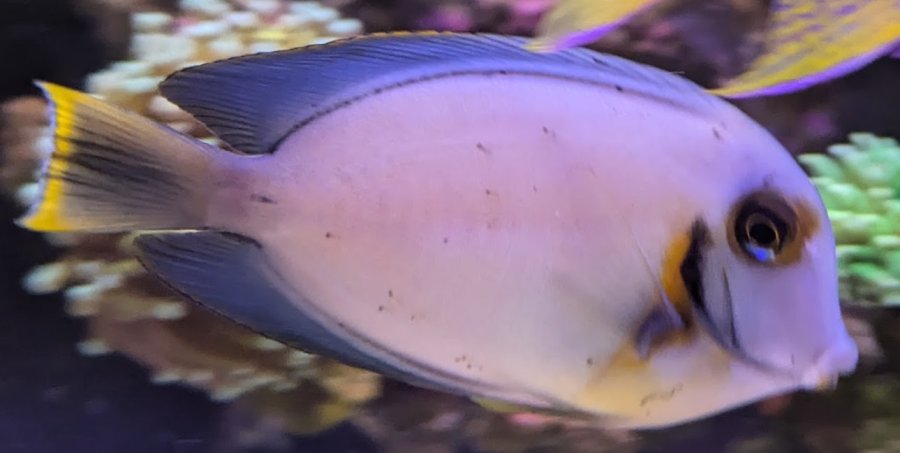
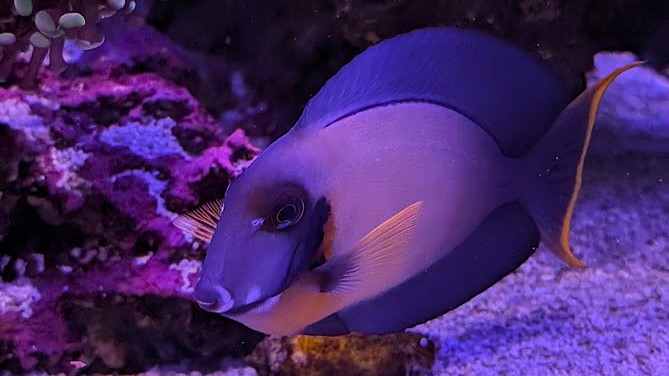
2. Case Study: Mimic Tang
3. Dosage Calculator
The most common mistake with PraziPro is overdosing by treating the tank's rated volume rather than the actual water volume.
4. The Protocol
Phase 1: The First Strike (Day 1)
- Remove Media: Carbon, GFO, and Purigen must be removed.
- Turn Off UV: UV light degrades the medication immediately.
- Skimmer Cup Off: Leave the skimmer running for oxygen, but remove the cup. It will overflow.
- Surface Agitation: Aim powerheads up. PraziPro reduces oxygen levels.
- Dose: Add the calculated amount to a high-flow area.
Phase 2: The Gap (Days 2-6)
Leave the system alone. Do not perform water changes unless ammonia rises. Observe fish for heavy breathing.
Recipe: 1 tbsp frozen food + 1 scoop General Cure + 1 scoop Focus (binder). Feed daily for 14 days.
Phase 3: The Second Strike (Day 7)
Timing is critical. At 78°F, fluke eggs hatch in about 4-5 days. We must hit them before they mature and lay new eggs.
- Water Change: Perform a 25% water change.
- Redose: Add the full dose of PraziPro again.
- Wait: Wait another 6 days (until Day 13).
Phase 4: Cleanup (Day 14)
Perform a large water change, turn UV back on, and run fresh Carbon to remove the medication.
Protocols for Pristine Corals
By utilizing rigorous clinical protocols on all utility fish, we ensure the grow-out systems in our Warner Robins nursery remain completely pest-free. This guarantees our coral specimens are perfectly healthy before nationwide shipping.
Shop The Apothecary Collection →